Opportunities in a Wrecked Shipping
Industry: Overview
By:
Michael Molman
This
article is Part 1 in a 3 Part series about the investment opportunities in
Shipping
So
far 2018 has proven to be a much more difficult year for investors then 2017.
Strong gains in January were followed by a sharp and brutal correction in
February which brought with it something that has been missing from the stock
market these last few years, volatility. Some traders like billionaire hedge
fund mogul, David Einhorn, believe value stocks will now begin to outperform
their fast-growing counterparts. This new stock market dynamic provides
investors with huge opportunities, if they know where to look.
The place to look is at industries and sectors that have been underperforming over the last few years and are poised for a comeback, shipping is one such industry. Shipping has been around for over 10,000 years and is one of the world’s most important industries. Over 90% of trade is carried by the international shipping business each year. The business is almost exclusively responsible for the shipping of raw materials from resource rich countries in Africa to factories in Asia and then the finished products to consumers in the U.S and Europe. Shipping’s importance in the global supply chain cannot be understated, however the last 10 years has seen the industry suffer one of its worst ever downturns, which saw freight rates drop an astounding 98% in some sectors. This in turn led to rapidly falling stock prices, bankruptcies and defaults throughout the shipping business. There are signs though, that shipping has passed its cyclical bottom and could be poised for a recovery. With shipping stocks trading at extremely depressed valuations investors have a rare opportunity. To understand it though, it is necessary to know how the shipping business is structured at what caused it to collapse in the first place.
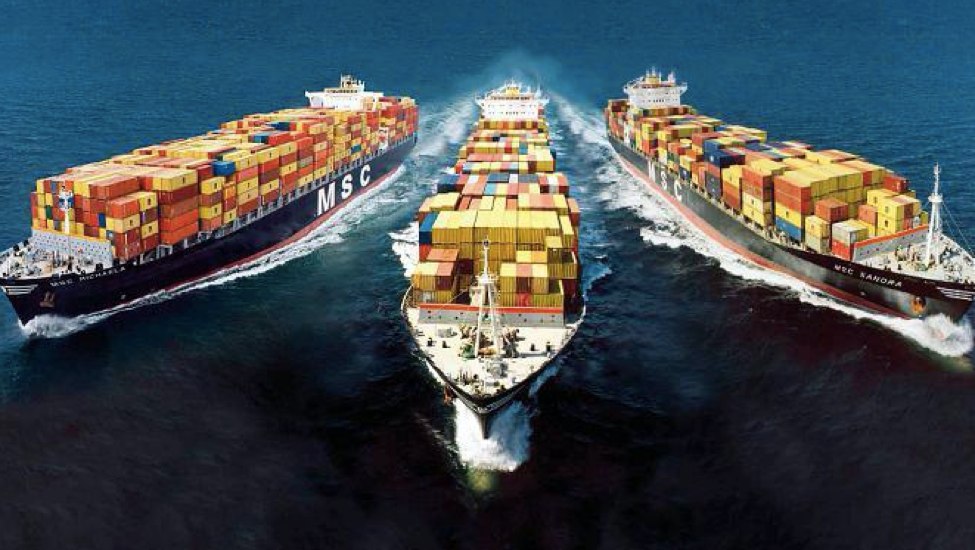
Although shipping is considered a single industry it is subdivided into many different parts. Different companies operate different types of vessels for different types of uses. There are three main types of commercial vessels; Dry Bulk, which are vessels designed to transport bulk commodities such as iron ore, coal, grains or scrap metal. Container vessels, which are ships designed to carry loads in containers (the ships in the picture above are examples of this type of vessel), and tankers which are ships that carry crude oil or refined products like gasoline. Each one of these categories is further broken down, for example, within the category of tanker vessels, there are ships designed to exclusively carry oil and those that are designed to carry only liquefied natural gas. Each different type of vessel has its own unique freight and spot market which determines how much each type of vessel makes a day when it is being chartered out. In many ways, the shipping business is like the commodities business in that when there is a large supply of ships freight rates are low, when there are too few rates are high.
In the years leading up to the great recession in 2008, international trade was booming, growing at an average rate of 5.4% a year. Emerging market economies, especially China, were growing rapidly and consuming more and more of the world’s raw materials. Meanwhile consumers in the U.S and Europe were enjoying a time of easy credit and were consuming record amounts of finished goods. At the same time, free trade agreements opened borders like never before which added fuel to international trade. This type of environment led to unprecedented prosperity in shipping. From October 2001 to June 2008 the Baltic Dry Index (a leading indicator of the shipping industry which shows the cost of shipping raw materials by sea) surged over 1200%. With the cost to charter a ship at a record high, owning a commercial vessel became extremely profitable. At one point in 2007 a 5-year-old 180,000 dead weight ton ship which hauled iron ore or coal cost $160 million. Freight rates for container shipping were equally high with the cost to ship a single container from Asia to Europe at over $2,800 (the current rate is about $1,200).
 |
| Chart showing annual growth of world's commercial fleet from 2000-2016 (Percentage Annual Change) |
With charter rates
soaring along with the prices of commercial vessels, shipping companies began
to order new vessels on mass. As the chart above shows, annual growth for the
worlds commercial fleet went from just over 1% in 2000 to just under 10% in
2011. The party came to an end in 2008 when the great recession hit. Consumption
in developed countries came crashing down, which in turn led to less demand for
raw materials in industrializing developing countries. International trade went
from growing over 5% a year to less than 1.5%, suddenly there was not enough
cargo to go around. In June 2008, a Panamax class bulk commodity freighter
commanded a daily charter fee of over $64,000, by December 2008 that fee had
dropped to $11,000 if the ship was lucky enough to have a charter at all. Container
shipping hardly fared better with the sector losing at least $15 billion in
2008 alone. The Baltic Dry Index which had been soaring for years up to the
financial crisis crashed an astounding 94% in 6 months.
The shipping business much like most other commodity related industries, is known for its volatile boom bust cycles. The difference was this time there was no recovery. Banks, which had been eager to lend to shipping firms for years, began to pull out of the business, due to heavy losses on shipping loans. With freight rates at unsustainable levels and no credit, shipping companies suffered, during this time the average shipping stock fell 80%. This hardly reduced the overcapacity in the industry. Due to a backlog of ship orders placed before the crash, new ships continued to hit the market until 2011, only worsening the supply glut, which has continued for the last 10 years. A brief recovery in global trade in 2013-2014 saw ship owners begin placing orders for new ships again, hoping to take advantage of the revival. This “comeback” was sunk by a slowdown in the Chinese economy and the commodities and oil collapse in 2014-15. Leading to a shipping market that continued to be oversupplied, and another 5 years of poor returns and steep losses.
The shipping business much like most other commodity related industries, is known for its volatile boom bust cycles. The difference was this time there was no recovery. Banks, which had been eager to lend to shipping firms for years, began to pull out of the business, due to heavy losses on shipping loans. With freight rates at unsustainable levels and no credit, shipping companies suffered, during this time the average shipping stock fell 80%. This hardly reduced the overcapacity in the industry. Due to a backlog of ship orders placed before the crash, new ships continued to hit the market until 2011, only worsening the supply glut, which has continued for the last 10 years. A brief recovery in global trade in 2013-2014 saw ship owners begin placing orders for new ships again, hoping to take advantage of the revival. This “comeback” was sunk by a slowdown in the Chinese economy and the commodities and oil collapse in 2014-15. Leading to a shipping market that continued to be oversupplied, and another 5 years of poor returns and steep losses.
 |
| Chart showing Baltic Dry Index from 2000-2018, freight rates fell as much as 98% from highs hit in 2008 to all time lows set in 2016 |
Over
the last decade, the shipping industry has struggled to deliver returns to
investors amid consistently low freight rates and oversupply of ships. However,
certain segments of the shipping industry are beginning to see improvement.
Most publically listed shipping companies trade below book value, so even a
moderate recovery in freight rates could lead to outsized returns for
investors.
The most obvious bullish sign for shipping firms is the recovery and growth of international trade. Global trade grew 3.6% in 2017 compared to just 1.3% in 2016, most of this recovery came from a recovery in Dry Bulk. A comeback in the industrial commodities coupled with increased demand for raw materials in China increased demand for dry bulk vessels. The Baltic Dry Index jumped over 300% since bottoming out in February 2016. Higher freight rates have led to increased revenue and for the first time in nearly 10 years, profits at some shipping firms. Maersk (the world’s largest container shipper) posted a $541 million profit in 2017 compared to a $376 million loss in 2016.
Higher freight rates and profitability have increased interest in shipping. According to a survey by accounting firm Moore Stephans, confidence levels in shipping are at the highest point since 2014, driven by increased cargo demand amid a growing global economy. This growing optimism helped facilitate an increase in the sale and purchase of ships. Ship trading increased almost 30% in the first 3 quarters of 2017 compared to the same period in 2016. About 1,630 ships worth $19 billion were traded in 2017, the highest total since shipping peaked in 2007. Increased ship trading helped boost the price of some types of commercial vessels as well. The same 150,000 dead weight ton dry bulk ship that cost $160 million in 2007, was only worth $24 million when the market hit bottom in early 2016. Since then prices have recovered slightly and in 2017 the ship fetched about $33 million. (Prices of second hand ships are determined by the economic lifetime of the vessel and its future earnings potential).
 |
| Chart showing the average price of second hand ships from 2010 through 2017. Ship prices increased on average 21% in 2017 due to increased market sentiment |
With
market sentiment improving along with freight rates and ship prices, some hedge
funds have decided that now is the right time to begin investing in shipping. Throughout
the latter half of 2017 hedge funds poured over $675 million into the industry.
One hedge fund, Tufton Oceanic which manages about $1.5 billion, put out a
statement saying, “shipping stocks are trading at the lowest valuations since
the late 1990’s and could increase 50-100% over the next 1 to 2 years.” Besides
just increased speculative and institutional buying of shipping stocks,
speculation in other forms of freight derivatives has also increased. Freight
derivatives are financial instruments which derive their value from speculation
about the future value of freight rates. According to leading ship broker SSY
Futures, speculation in freight derivatives soared to $16.5 billion in 2017
compared to just $9 billion in 2016. This could signal that many large
speculative and institutional investors are worried about missing the chance to
invest at the bottom of the market when asset prices and freight rates are
lowest.
Unfortunately, similar indicators occurred during the brief shipping recovery in 2013-14. Hedge funds invested hundreds of millions into the sector at the time based on forecasts of improved global economic growth. Unfortunately, the recovery was derailed by not just an emerging markets slowdown and commodities crash, but also by shipping companies over ordering new ships. Many shipping companies began ordering new ships before the market had recovered to get a jump on rivals when freight rates bounced back. This only increased the oversupply of ships in the market and caused another industry downturn.
Unfortunately, similar indicators occurred during the brief shipping recovery in 2013-14. Hedge funds invested hundreds of millions into the sector at the time based on forecasts of improved global economic growth. Unfortunately, the recovery was derailed by not just an emerging markets slowdown and commodities crash, but also by shipping companies over ordering new ships. Many shipping companies began ordering new ships before the market had recovered to get a jump on rivals when freight rates bounced back. This only increased the oversupply of ships in the market and caused another industry downturn.
This time though there are far less ships on order and according to analysts at major banks and consulting firms, the amount that there is, is unlikely to depress the market like in 2014. According to ship consulting firm, Danish Ship Finance, shipbuilders saw their order books decline by over 15% in the first 3 quarter of 2017. New deliveries of ships far exceeded new orderings which has caused many ship yards to close entirely. At the beginning of 2018 ship building capacity was 10% lower than a year prior. Globally there is 3,000 commercial vessels on order, which is the lowest amount since 2003. The lack of new ships on order, means that as global trade continues to increase (as it is expected to) and increases demand for shipping, there will be less supply in the market. This is a recipe for a shipping comeback.
Despite the bullish signs coming from the shipping industry investors must be careful about which companies and sectors they invest in. Many segments of the shipping business such as off shore vessels (ships supporting offshore drilling), container ships, and oil tankers continue to suffer from oversupply and low freight rates. These segments might one day prove great opportunities but in the current market investors ought to focus on sectors of the shipping business that are already on the road to recovery. The areas of the shipping industry that offer investors the greatest opportunities are dry bulk shipping, LNG and LPG carriers as well as American close shore shippers. Investors hoping to invest in a shipping recovery without choosing individual companies have the option to buy into Guggenheim Invest Shipping ETF (SEA). This ETF is made of the largest shipping companies in multiple segments of the shipping industry. With that being said, the best returns will be had by investing in undervalued individual companies operating in segments of the shipping industry that are set to recover and thrive over the next couple of years. These specific opportunities will be described in greater detail over the course of the next two articles in this series on shipping.

http://www.talkmarkets.com/contributor/Mike-Molman/?uid=50272
Disclaimer: This material has been written for informational purposes only, it should not be considered as investment advice. Any investment decision should be made after consulting multiple sources and a financial advisor.


